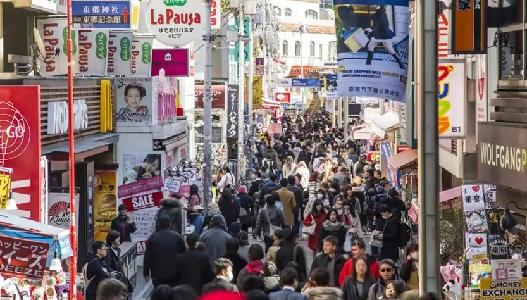
Takeshita Street.
Teenage girls strolling with a Marion Crêpe in hand.
Late 1970s Tokyo — long before “influencer” was even a word.
They didn’t know it,
but they were starting a revolution in sugar and self-expression.
Thin crepe, whipped cream, strawberries —
an edible declaration of independence.
Kawaii began not as a fashion trend,
but as a taste that people carried through the streets.
Rainbow Pancake.
Four centimeters of soft sponge and gentle steam.
Whipped cream piled like clouds.
Pastel colors perfectly made for Instagram.
On lazy afternoons,
university girls line up with iPhones in hand,
their photos filtered in the same shade of dreamy pink.
Kawaii became a shared sense of beauty —
less about flavor,
more about being seen, together.
Still, that sweetness in the air
somehow makes you believe
that happiness might just be a dessert away.
At ROLL ICE CREAM FACTORY,
the sound of metal scrapers spins across the cold plate.
Each roll of ice cream feels like a tiny performance of identity —
decorated, documented, shared.
Nearby, TOTTI CANDY FACTORY sells rainbow cotton candy
like pastel clouds floating above the crowd.
It’s light, almost absurd,
and somehow that’s exactly what “cute” means now —
a dream you can eat before it melts.
Kotobukiseian, the matcha atelier,
serves green tea parfaits in bamboo cups,
their gold leaf glimmering softly under LED light.
And I’m donut ? offers a new kind of sweetness —
fermented, airy, barely there.
Kawaii has stopped shouting;
it now whispers, calmly,
finding beauty in silence and simplicity.
Crepes, pancakes, ice cream, donuts —
they all disappear in seconds.
But that’s the secret:
their fleeting nature is the rhythm of Harajuku.
Kawaii isn’t just a look.
It’s a heartbeat of Tokyo —
sweet, ephemeral,
sometimes bitter,
and somehow, always… crystal.


コメント