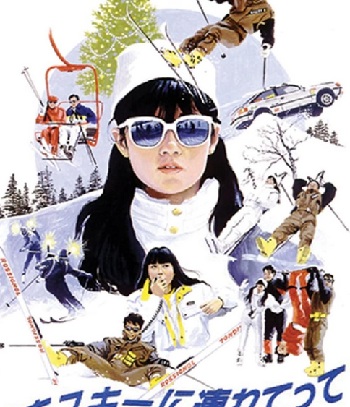
The snow glows under the night lights.
Laughter, the creak of the lift, and white breath rising in the cold air.
Back then, the ski slopes burned with the heat of life.
Now, the snow has thinned, and the crowds have faded.
Yet the warmth in our hearts has not disappeared.
For the skiers of the Showa era, the new form of skiing is no longer just about gliding down the slope—
it’s about living together.
■ A Story That Begins with the Memory of Silver Snow
In the 1980s, the ski slopes were youth itself.
We drove big four-wheelers to Echigo-Yuzawa, and burst into snowfields that glittered in the morning sun.
Even long lift lines felt fun—filled with laughter and stories among friends.
The sound of metal rental skis, the flash of colorful ski wear,
and the melody of “Take Me Skiing” in the background.
Skiing was not just a sport;
it was a winter culture, a spark of life.
But as times changed, the planet warmed, snow declined,
and many ski resorts quietly vanished.
Still, for those of us who loved the snow, there remains something we want to say—
a wish to pass skiing on as a sustainable culture for the future.
■ Where Is Japan’s Ski Culture Heading?
Japan’s ski culture began with military snow training,
then blossomed as leisure during the postwar recovery.
In the 1970s, it joined forces with group travel and hot springs,
and by the late 1980s, a historic boom swept the nation.
But after that passion came the collapse of the economic bubble,
a declining birthrate, and the effects of climate change.
Skiing retreated to being a “special hobby.”
Now once again, we must ask ourselves:
“What is skiing? How do we keep it alive?”
For what we saw in the snow was never just a playground.
It was a place where nature and humanity breathed together—
the very expression of the Japanese spirit that lives with the seasons.
■ Choosing a Sustainable Ski Life
“Sustainable skiing” isn’t about flashy slogans.
It’s a way of life that values both nature and the local community.
Not consuming the snow, but living with it.
Staying in local inns, savoring local food,
turning each lift ticket into support for the region’s future.
This new, relationship-based style of skiing is slowly taking root.
The “heat” once nurtured by the Showa ski boomers can be preserved in new form.
It’s not about speed or trends.
It’s about reverence for snow and kindness toward nature—
and within that spirit lies the hope for the next generation of ski culture.
■ Reviving Snow Country from Tokyo
Ski resorts in Niigata and Gunma—easily accessible from Tokyo—
are emerging as models of sustainable skiing.
GALA Yuzawa connects directly to the Joetsu Shinkansen station,
offering a low-carbon resort experience that doesn’t rely on private cars.
Partnering with local farmers, it serves Yuzawa-grown lunches,
creating a system that turns tourism into a sustainable local economy.
In Minakami, Gunma, nestled at the foot of Mt. Tanigawa,
ski resorts, schools, and hot spring towns collaborate
to teach children about the importance of snow and water.
Skiing there becomes an act of learning and love for the region.
Meanwhile, Marunuma Kogen Ski Resort in Katashina Village
is pioneering renewable energy and forest preservation projects—
striving to become a “resort that protects the forest.”
In summer, it transforms into a hub for hiking and camping,
embracing life with nature all year round.
What all these places share is the spirit of participation—
not “ski and go,” but “ski and support.”
Just a few hours from Tokyo, we can be directly involved
in the future of Japan’s snow country.
■ Living with Snow
Skiing is a miraculous meeting between humans and nature.
The simple act of snowfall—something we once took for granted—
is, in truth, a blessing beyond measure.
The Showa ski boomers learned that gratitude through their youth,
as they carved their paths across the shining white.
The skiing of tomorrow
should be more than speed and skill.
It should be a culture of connection—of heart, nature, and people.
And when we feel the wind again on the snow,
we’ll remember:
That time we laughed together in the white silence
was never just play.
It was a living memory—
a hope born from the bond between humanity and snow.


コメント